PM Awas Yojana Gramin 2026 has brought fresh hope to rural families with a new survey and an updated beneficiary list. The Pradhan Mantri Awas Yojana Gramin (PMAY-G) scheme helps poor rural households build a pucca (permanent) house with direct financial assistance, and under PM Awas Yojana Gramin 2026 the ongoing Awas Plus 2024 survey has opened the door for many families who were left out earlier. Here is the latest update and what you should do to make sure your name is included.
Table of Contents
The Awas Plus 2024 survey — your chance to be added
The most important part of PM Awas Yojana Gramin 2026 is the Awas Plus survey, a government drive to identify eligible rural families who are not yet on the PMAY-G list. A key change this time is the self-survey option: instead of waiting for an official to visit, eligible families can register themselves using the AwaasPlus 2024 mobile app, complete a simple form, and submit their details for verification. This has made it far easier for genuinely eligible households in remote villages to apply. If your family does not own a pucca house and meets the income and deprivation criteria, this survey is your opportunity to be added to the list.
How much help does PM Awas Yojana Gramin give?
Under PM Awas Yojana Gramin 2026, an approved family receives strong financial support to build a house, released in installments through Direct Benefit Transfer as construction progresses:
- ₹1.20 lakh for families in plain areas.
- ₹1.30 lakh for families in hilly regions, difficult areas and IAP (Integrated Action Plan) districts.
- 90 to 95 days of unskilled labour wages under MGNREGA while you build.
- ₹12,000 for a toilet through the Swachh Bharat Mission.
- Support for a clean cooking connection and other convergence benefits.
Together these benefits significantly lower the cost of building a safe, permanent home for a rural family.
How to do the self-survey and apply
If you believe you are eligible for PM Awas Yojana Gramin 2026, act while the survey window is open in your area. The broad steps are:
- Download the AwaasPlus 2024 self-survey app or visit your Gram Panchayat for help.
- Complete the survey form with your Aadhaar, family and housing details.
- Submit and note your reference details for tracking.
- Wait for verification by the local authorities, who confirm your eligibility before your name is added to the list.
How to check the PMAY-G beneficiary list and status
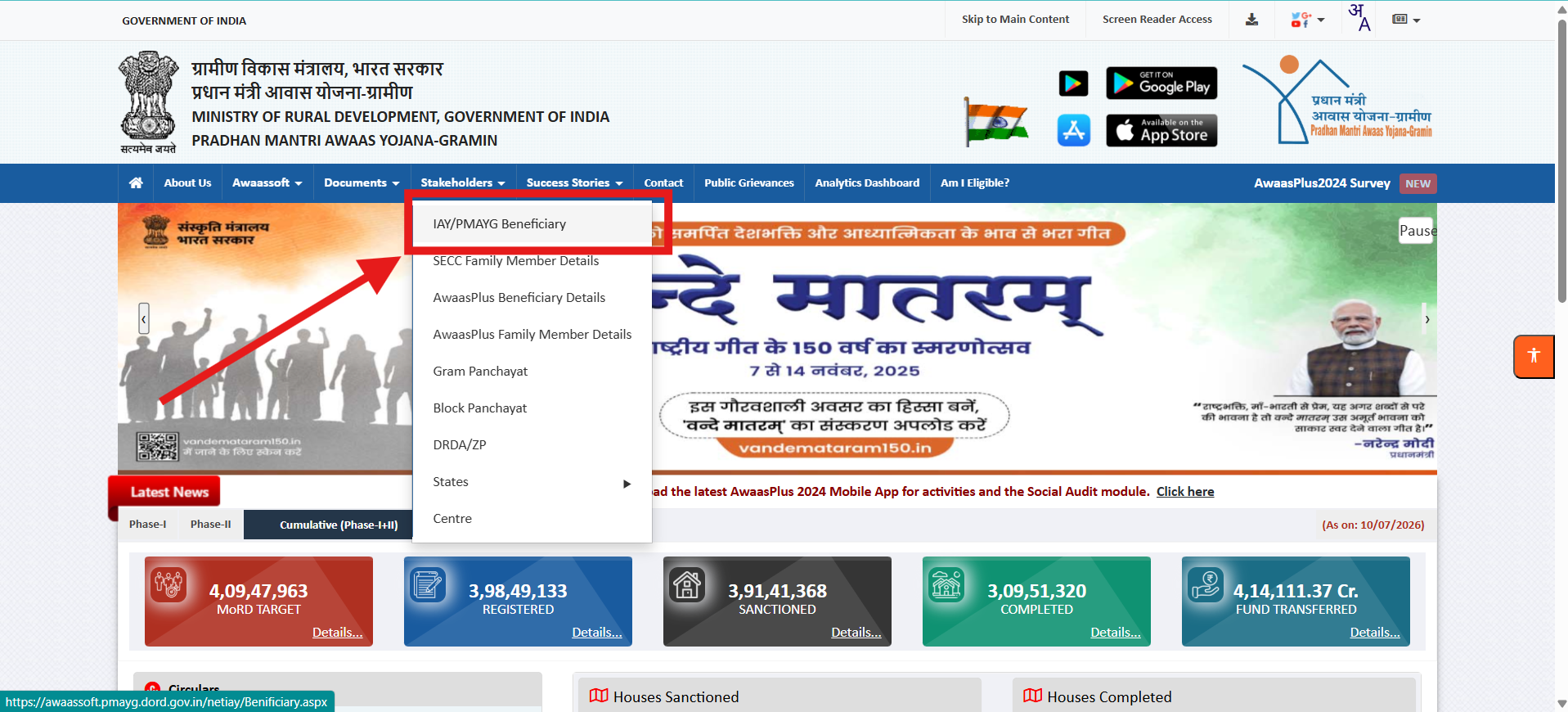
Once the PM Awas Yojana Gramin 2026 list is updated, you can check whether your name has been included. Open pmayg.nic.in, go to the beneficiary section, and search by your registration number, by name, or view the village-wise list. For a step-by-step walkthrough of checking your application status for both PMAY-Gramin and PMAY-Urban, read our PM Awas Yojana status check guide, and see our detailed PMAY Gramin list guide to find your name.
PMAY-G 2026 — key facts
| Scheme | PM Awas Yojana Gramin (PMAY-G) |
| Help (plain areas) | ₹1.20 lakh |
| Help (hilly/IAP) | ₹1.30 lakh |
| Extra benefits | MGNREGA wages + ₹12,000 toilet |
| Apply via | AwaasPlus 2024 self-survey app |
| Check list | pmayg.nic.in |
Why this matters and what to watch
Under PM Awas Yojana Gramin 2026 and its earlier phases, India has already completed more than 3.09 crore rural houses under PMAY-G, and the target has been expanded further under PMAY 2.0. That means more families will be covered in the coming rounds. Keep an eye on survey announcements in your Gram Panchayat, complete your self-survey while the window is open, and make sure your Aadhaar and bank account are linked so any approved installment reaches you without delay. Never pay a middleman to ‘add’ your name — the survey and application are free.
Who is eligible for PM Awas Yojana Gramin?
PM Awas Yojana Gramin 2026 is meant for rural families who do not have a pucca house of their own. Eligibility is based on the SECC (Socio-Economic Caste Census) data and the Awas Plus survey, with priority for the most deprived households. Broadly, your family should be houseless or living in a kachcha house of one or two rooms, and should not own a motorised vehicle, mechanised farm equipment, a government job, or income above the prescribed limit. Families already covered under a previous housing scheme are not eligible again.
Documents you need for the survey
Keep these ready before you start the self-survey so the process is smooth:
- Aadhaar card of the family head and members, with consent for use.
- An Aadhaar-linked bank account passbook.
- Your MGNREGA job card number, if you have one.
- A working mobile number for OTP and updates.
- Details of your current house and land, if any.
Having accurate documents ready reduces the chance of your application being rejected during verification.
You can also track your application and any released installment through the AwaasSoft reports on pmayg.nic.in, and raise a grievance there if your verified name does not appear in the final beneficiary list.
Disclaimer: PMYojnaUpdates.com is an independent information portal and is not affiliated with any government body. Scheme rules and dates can change — always confirm the latest details on the official portal pmayg.nic.in.